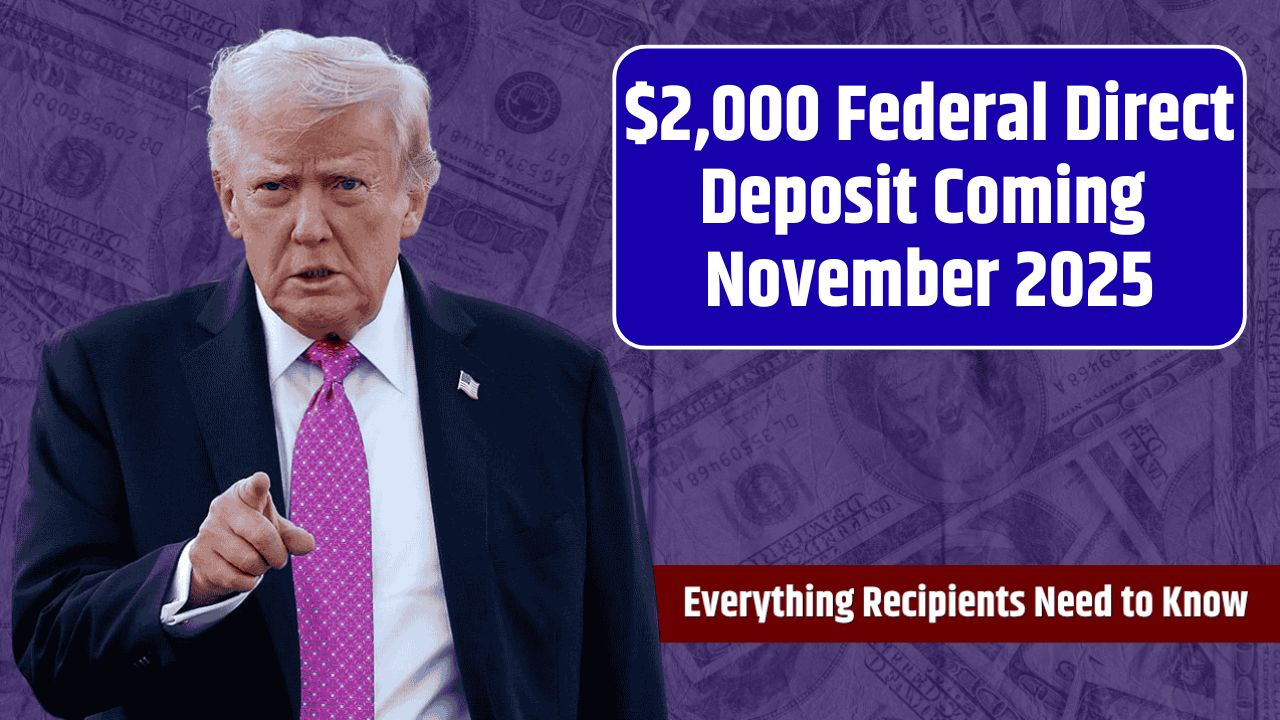
$2,000 Federal Direct Deposit:Here’s an article with a human touch that will help you and others understand reports of a $2,000 federal direct deposit coming in November 2025, and what it means (and doesn’t mean) for you.
A Topic of Discussion
Recently, there has been a lot of talk that the Internal Revenue Service (IRS) will issue $2,000 payments via direct deposit in November 2025. Many taxpayers are hopeful—after years of rising costs and financial pressures, the one-time payment will be a welcome relief.
This discussion stems primarily from policy proposals: for example, Donald Trump publicly stated that his administration would pay “at least $2,000 per person (excluding high-income earners!)” funded by tariff revenue.
These comments generated widespread media coverage and community discussion.
The Official Fact
The bottom line is this: As of now, there is no approved legislation or official IRS program that guarantees a $2,000 payment to all Americans in November 2025. The IRS itself has confirmed that no new federal stimulus payments have been scheduled.
In short: this payment is a political proposal, not an enacted benefit.
If the program is approved, who could be eligible?
While there are no definitive rules yet, analysts suggest that eligibility rules could be similar to previous federal relief payments. Based on reports:
- U.S. citizens or lawful permanent residents with a valid Social Security number.
- Annual income limits: For example, single filers earning up to about $75,000 may be eligible for the full amount; married joint filers earning up to about $150,000.
- Recipients of programs like Social Security, SSI/SSDI, or VA benefits, if eligible, may receive it automatically.
- Possibly excluding high-income earners (although no specific limit is set by law).
What to do now if you’re expecting a payment?
- Keep an eye on official channels. Check irs.gov and trusted government sources for any announcements.
- Make sure your tax filing is up-to-date. If eligibility is tied to a recent tax return, you’ll want everything in order.
- Update your direct deposit information. If a payment goes through, direct deposit is usually faster than a paper check.
- Beware of fraud. Since the payment hasn’t been confirmed, fraudsters may claim a “guaranteed deposit of $2,000” and ask for banking information or fees. Government agencies warn against this.
- Plan for contingencies. Even if this payment doesn’t come through, many federal and state benefits will continue. Don’t rely solely on a hypothetical payment.
Why it matters—and why there’s uncertainty
For many Americans, especially those on fixed incomes or struggling with rising expenses, the prospect of a $2,000 payment represents a meaningful boost. Emotional relief and hope can be just as important as the dollars themselves.
Also, uncertainty stems from the fact that federal payments must be authorized by Congress, implemented by the IRS, and properly funded. Experts warn that the cost of a one-time $2,000 payment (if scaled to hundreds of millions of dollars) would be enormous and possibly even exceed proposed funding sources like tariff revenue.
Summary
If you see headlines like “Federal direct deposit of $2,000 in November 2025,” it’s natural to be hopeful—but it’s also important to be cautious. Currently, no official program has been approved.
If you’re eligible (if and when a payment is authorized), filing taxes, keeping your banking information updated, and being vigilant against fraud are your best bets. And if a payment doesn’t come—or is delayed—remember that you still have ongoing benefits and state-level programs that may provide assistance.
If you’d like, I can check state-level direct deposit programs in November 2025 (some states may provide their own relief payments) and send you a list of them. Would that be helpful?
